
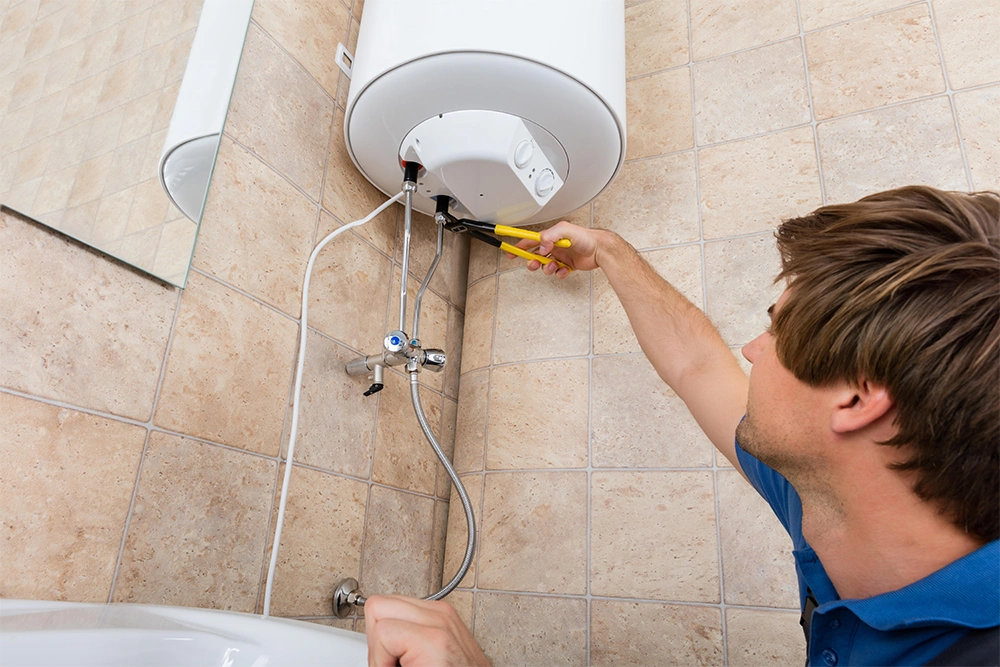
When a water heater starts acting up, the first question most homeowners ask is whether it’s worth fixing or whether it’s time to replace the whole unit. The answer usually comes down to a handful of factors: the age of the unit, the specific problem it’s having, and how the cost of repeated repairs stacks up against the cost of starting fresh.
Start With the Age of the Unit
A traditional tank water heater generally has a useful lifespan of somewhere around 8 to 12 years, while a tankless unit can often last considerably longer with proper maintenance. If your water heater is still relatively young, a repair is often the more sensible choice. If it’s already near or past its expected lifespan, even a successful repair may just be delaying a replacement that’s coming soon anyway.
Look at the Specific Problem
Some water heater issues are minor and inexpensive to fix, such as a faulty thermostat, a broken heating element, or a pilot light that won’t stay lit. Others are much more serious signs that the unit itself is failing, particularly a leaking tank, which almost always means the tank has corroded from the inside and can’t be repaired, only replaced.
Water That’s Discolored, Smells Off, or Never Gets Hot
Water that comes out rusty or discolored, has a strange odor, or never gets fully hot can point to sediment buildup, a failing heating element, or a tank that’s corroding internally. Some of these issues respond well to a repair or a flush, but if the same symptoms keep returning after a repair, that’s often a sign the tank itself is beginning to fail.
Strange Noises Coming From the Tank
Rumbling, popping, or banging sounds coming from a water heater are usually caused by sediment that has built up at the bottom of the tank over time. In many cases, a professional flush can resolve this and extend the unit’s useful life. In an older unit, though, heavy sediment buildup can also be a sign of accelerated wear that makes replacement the more cost-effective option in the long run.
Any Sign of a Leak Around the Tank
A leak at a fitting, valve, or connection is often a simple, inexpensive repair. A leak coming from the tank itself is a different situation entirely, since it means the tank has corroded through, and tanks in that condition cannot be repaired. If you notice water pooling around the base of your water heater, it’s worth having it inspected right away, since a failing tank can fail completely with very little warning.
Comparing the Cost of Repeated Repairs to Replacement
A single repair is almost always cheaper than a full replacement up front, but the calculation changes if you’re facing your second or third repair within a short period of time. At a certain point, continuing to repair an aging unit costs more overall than simply replacing it, especially when you factor in the improved energy efficiency that a newer water heater typically offers.
Energy Efficiency Is Part of the Decision Too
Water heater technology has improved significantly over the past decade, and a newer unit, whether a more efficient tank model or a tankless system, can meaningfully lower monthly energy costs. For an older unit that’s already showing signs of wear, that efficiency improvement is often enough on its own to tip the decision toward replacement rather than another repair.
When Replacement Is Almost Always the Right Call
A few situations point clearly toward replacement rather than repair: a leaking tank, a unit that’s already past its expected lifespan, a household that has outgrown its current water heater’s capacity, or a pattern of repeated repairs within a short window of time. In these cases, continuing to repair the existing unit usually just delays an expense that’s coming either way.
Not Sure Which Situation You’re In?
Deciding between a repair and a full replacement isn’t always obvious from the symptoms alone, and getting it wrong in either direction can cost you money.